5.主动脉瓣二瓣畸形所致主动脉瓣狭窄的外科治疗

中华胸心血管外科杂志2009;25:11-13
崔永超 来永强 李进华 赖以恒 李京伟 郝兴海 章良 戴江 孟旭 周其文
摘要
目的:总结主动脉瓣二瓣畸形所致的单纯主动脉瓣狭窄外科手术治疗的临床经验。北京安贞医院心脏外科中心来永强
方法:1993年5月-2007年12月,我院共收治主动脉瓣二瓣畸形所致的单纯主动脉瓣狭窄患者103例,其中男性66例,女性37例。年龄15-75岁,平均52.9±13.2岁。心功能Ⅱ级58例,Ⅲ级33例,Ⅳ级12例。所有患者均接受主动脉瓣替换术,同期行左室流出道疏通2例、房颤射频消融2例、升主动脉替换7例,冠状动脉旁路移植11例。
结果:手术死亡1例(死亡率0.93%),III度房室传导阻滞1例,其余患者均治愈出院。随访时间6月-14年(平均86.3±26.8月)。14 例患者失访,随访率86.2%。3例出现脑出血或栓塞并发症,1例猝死,1例非心脏原因死亡。最后随访患者心功能,Ⅰ级67例,Ⅱ级17例,Ⅲ级2例。
结论:主动脉瓣替换治疗主动脉瓣二瓣畸形所致的单纯主动脉瓣狭窄有比较好的疗效,合并升主动脉扩张应积极处理。
关键词:心脏瓣膜疾病 心脏瓣膜假体植入,心脏外科手术主动脉瓣狭窄 主动脉瓣二瓣畸形
Surgical management of isolated aortic stenosis in patients with bicuspid aortic valve
LAI Yong-Qiang, CUI Yong-chao , LI Jin-hua, et al.
Department of Cardiac Surgery, Beijing Anzhen Hospital, Capital Medical University, Beijing 100029,China
Abstract
Objective: Bicuspid aortic valve is the most common reason of aortic valve replacment in patients with isolated aortic stenosis. Severe valve calcification and ascending aorta dilation are often related to bicuspid aortic valve. Proper surgical intervention of these patients are very important , and it may affect the long-term result. Our experience in surgical management of isolated aortic stenosis in patients with bicuspid aortic valve is reported .
Methods: From May. 1993 to Dec. 2007, 103 consecutive patients with isolated aortic stenosis and bicuspid aortic valve underwent surgical treatment. There were 66 males and 37 females, and age ranged from 15 years to 75 years (mean52.9±13.2 years). 58 patients were in heart function (NYHA) class Ⅱ, 33 cases were in class Ⅲ, and 12 cases in class Ⅳ. All patients received aortic valve replacement. Severe aortci valve calcification existed in 55 patients, and ascending aorta dilation (aorta diameter larger than 4.5cm) occurred in 7 cases. Concomitant procedures were as following: left ventricular out-flow obstruct correction in 2 cases, frequency ablation for atrial fibrillation in 2 cases, ascending aorta replacement in 7 cases, and coronary artery bypass graft in 11 cases.
Results: Operative death occurred in 1 patient (mortality 0.93%). Complete atrioventricular block occurred in 1 patient. Others recovered and discharged. The follow-up ranged from 6 months to 14 years (86.3±26.8 months).14 cases lost in the follow-up. Brain complications occurred in 3 cases. Sudden death and no-cardiac death occurred in 1 patient, respectively. Heart function improved significantly after operation. 67 patients were in function class Ⅰ, 17 patients were in Ⅱ, and 2 in class III at the latest follow-up.
Conclusions: Aortic valve replacement is an effective method for patients with aortic stenosis and bicuspid aortic valve. When ascending aorta dilation is associated, more aggressive method should be considered.
[Key words] Heart valve disease Heart valve prosthesis implantation Cardiac surgical procedure Bicuspid aortic valve Aortic stenosis
单纯主动脉瓣狭窄是一种较为少见的瓣膜疾病,其病因包括退行性病变、先天性畸形和风湿性病变。先天性主动脉瓣二瓣畸形是导致成人主动脉瓣狭窄的主要原因,近50%的主动脉瓣狭窄为主动脉瓣二瓣畸形[1] 。人群中约有0.5%-2%的具有先天性主动脉瓣二瓣畸形,多见于男性;主动脉瓣二瓣畸形中导致明显的主动脉瓣狭窄的约占14%[2-4]。我院自1993年5月-2007年12月共收治单纯主动脉瓣狭窄患者253例,其中主动脉瓣二瓣畸形患者103例,现总结如下。
资料与方法
自1993年5月-2007年12月共有103例主动脉瓣二瓣畸形所致的单纯主动脉瓣狭窄患者在我院接受外科手术治疗。男性66例,女性37例。年龄15-75岁,平均52.9±13.2岁。心功能心功能Ⅱ级58例,Ⅲ级33例,Ⅳ级12例。合并左室流出道狭窄2例,心房纤颤2例,升主动脉扩张7例,冠心病11例。术前超声心动图检查:左室收缩末内径13.7-54mm(30.1±8.0mm),左室舒张末内径32.5- 67mm(47.3±6.8mm),左室后壁厚度7.4-21mm(12.8±2.7mm),左室射血分数29-72.4% (65.3±12.8%),主动脉瓣跨瓣压差53-201mmHg(89.1±43.8mmHg)。
手术均在全麻、中度低温体外循环下进行,心肌保护方法采用顺行灌注冷血停搏液。全部患者均接受主动脉瓣替换治疗。55例患者存在严重的主动脉瓣钙化,并且钙化累及部分主动脉瓣环或间隔组织。1例主动脉瓣二瓣畸形合并主动脉瓣瓣环发育不良患者接受主动脉瓣瓣环扩大术(图一),2例合并左室流出道狭窄的患者行左室流出道疏通术后再行主动脉瓣替换术;2例合并房颤的患者先行冲洗式单极射频消融术后再进行主动脉瓣替换术;7例合并升主动脉扩张的患者同期接受升主动脉人工血管替换;11例合并冠心病的患者同期接受冠状动脉旁路移植术。对于主动脉瓣钙化严重的患者,在切除瓣膜后,小心地在左室流出道填充纱布,并仔细剔除累及瓣环甚至间隔的钙化组织,防止钙化组织脱落入左心室内。切除病变的主动脉瓣膜后测量主动脉瓣环内径,选择合适的人工瓣膜。92例患者接受机械瓣替换,11例患者接受生物瓣替换。人工瓣膜大小19-28mm (21.42±1.72mm)。主动脉阻断时间35-284min (78.91±27.49min)。
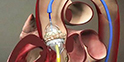
图一: 主动脉瓣环扩大,主动脉瓣替换。
结果
1例合并左室流出道狭窄患者于手术结束后心脏不能正常复跳,两次阻断循环,脱机困难,最终死于低心排综合征。Ⅲ度房室传导阻滞1例,术后安装永久性起搏器。7例同期行升主动脉替换患者恢复良好。超声心动图测定术后主动脉瓣跨瓣压差18-55mmHg(30.2±12.7mmHg)。随访时间6月-14年(平均86.3±26.8月)。14 例失访,随访率86.2%。3例出现与抗凝有关的脑部并发症,1例猝死,1例非心脏原因死亡。最后随访患者心功能,Ⅰ级67例,Ⅱ级17例,Ⅲ级2例。
讨论
主动脉瓣二瓣畸形是先天性主动脉瓣狭窄最常见的病因,约占先天性心脏病的3-5%[5]。主动脉瓣二瓣畸形在婴幼儿及儿童期多不引起主动脉瓣狭窄。 成人期后由于瓣膜结构异常而导致血流涡流,损伤瓣叶,引起瓣膜的纤维化和钙化,随着钙化的加重,会导致明显的主动脉瓣狭窄。主动脉瓣二瓣畸形患者多在50-60岁出现明显的主动脉瓣狭窄的临床症状[4,6]。本组患者平均手术年龄为53岁,与国外报道的手术年龄类似,这说明主动脉瓣二瓣畸形的病情进展仅与其病理改变有关,而无明显的种族差异。
单纯主动脉瓣狭窄患者中,主动脉瓣二瓣畸形可达49% [1]。本组103例主动脉瓣二瓣畸形患者在我院同期收治的253例单纯主动脉瓣狭窄患者中占41%。这说明主动脉瓣二瓣畸形在我国也是导致主动脉瓣狭窄的主要病因。主动脉瓣二瓣畸形存在明显的性别差异。女性发病率明显低于男性,国外报道女性主动脉瓣二瓣畸形的发病率为23-25%[4,7]。本组37例女性患者占患者总数的36%,说明我国主动脉瓣二瓣畸形的性别发病率与国外报道类似,同样存在性别特异性,男性发病的几率明显高于女性。
与主动脉关闭不全患者比较,主动脉瓣二瓣畸形所致的主动脉瓣狭窄患者的主动脉瓣瓣环相对较小。如何选择一个合适的人工瓣膜对于这类患者极其重要。应尽可能选择有效瓣口面积较大的瓣膜,这样有助于降低术后的跨瓣压差,改善心脏功能,提高远期疗效。对于瓣环较小的患者,勉强替换一个较小的人工瓣膜可能会残留较大的跨瓣压差,从而影响远期疗效;这类患者应该果断采用主动脉瓣瓣环扩大手术,植入一个有效瓣口面积较大的瓣膜,对于降低术后跨瓣压差,改善心脏功能极有必要。采用瓣环扩大进行主动脉瓣替换有极高的手术成功率和较好的远期疗效,Kurosawa等报道一组平均年龄为12岁的60例患者,采用经典的Konno手术进行主动脉瓣环扩大及主动脉瓣替换,无手术死亡,10年免除再手术率为80%,15年免除再手术率为52%[8]。本组有1例成人患者为主动脉瓣二瓣畸形合并主动脉瓣瓣环发育不良,主动脉瓣环径仅为16mm,采用主动脉瓣环扩大后植入20mm AP 机械瓣,术后跨瓣压差为25mmHg,随访52月,效果满意。近年来,随着瓣膜设计的改进和提高,环上机械瓣被大量应用,取得比较满意的治疗效果,并避免了主动脉瓣环扩大手术所带来的各种风险[9]。
主动脉瓣二瓣畸形所致的主动脉瓣狭窄瓣膜常存在极为严重的钙化,有时钙化会累计瓣环、主动脉壁、二尖瓣前叶甚至侵及心肌。完全剔除钙化组织,对于顺利植入人工瓣膜,避免栓塞,减少术后瓣周漏的发生极为重要。本组有55例患者存在严重的主动脉瓣钙化,部分患者钙化累及主动脉瓣环或间隔组织。在切除瓣膜后,应小心地在左室流出道填充纱布,并仔细,完全地剔除累及瓣环甚至间隔的钙化组织,防止钙化组织脱落入左心室内。本组患者在术后随访过程中,无瓣周漏发生。若钙化累及主动脉瓣下的传导区,在清除钙化组织时,有可能会损伤传导束而导致III度房室传导阻滞。本组有1例患者术后发生该并发症需要安置永久性起播器。我们在主动脉瓣单瓣畸形所致的主动脉瓣狭窄手术中同样发现这种现象[10]。
主动脉瓣二瓣畸形所致的主动脉瓣狭窄常合并升主动脉扩张,其发生率高达35-80%,并有明显的种族差异性[4,11-13]。本组患者中有7例(发生率7%)合并有升主动脉扩张,明显低于国外报道。而同期收治的非二瓣畸形的单纯主动脉瓣狭窄患者中,仅有0.7%合并升主动脉扩张。因此,在我国主动脉瓣二瓣畸形合并升主动脉扩张的几率同样要高于非二瓣畸形患者。主动脉瓣二瓣畸形所致的升主动脉扩张不能完全归因于狭窄后扩张。二瓣畸形多合并有主动脉壁的组织结构异常,二瓣畸形不但容易导致升主动脉扩张,还可导致升主动脉瘤和主动脉夹层的发生,患者猝死的几率明显高于其他类型的主动脉瓣狭窄[14,15]。二瓣畸形导致的升主动脉扩张是进行性的, Novaro等报道主动脉每年的扩张速度为0.2±2mm [16]。而且该类患者即使实施了主动脉瓣替换,也不能阻止升主动脉的进行性扩张[17,18]。有研究表明,二瓣畸形患者在进行了主动脉瓣替换后仍然具有发生急性主动脉夹层和猝死的风险,原因可能在于血流对具有先天性缺陷的动脉壁的退化仍有促进作用[18, 19]。Borger等认为升主动脉内径大于45mm时,在处理主动脉瓣疾病时应同期处理升主动脉病变[20]。本组有7例合并升主动脉扩张,均同期行升主动脉替换术,治疗效果满意。我们同样认为如果主动脉瓣二瓣畸形患者合并有升主动脉扩张应进行积极的外科处理,这样可以减少术后严重并发症的发生。
少部分主动脉瓣二瓣畸形患者合并室间隔肥厚,导致左室流出道狭窄,对这部分患者的处理应该慎重。本组有1例患者行左室流出道疏通和主动脉瓣替换,术后发生严重的低心排综合症,不能撤除体外循环死亡。本组随访时间6月-14年(平均86.3月)。3例出现与抗凝有关的脑部并发症。因此,尽管主动脉瓣替换发生与抗凝有关的并发症少于二尖瓣替换,但抗凝仍是主动脉瓣机械瓣替换的一个重要问题。因此,对于60岁以上的患者,选择生物瓣替换不失为一个明智的选择,这样可有效避免抗凝有关并发症的发生。本组有11例患者接受生物瓣替换,在随访过程中,无与抗凝有关的脑部并发症,具有良好的治疗效果。本组患者在随访过程中,没有明显的升主动脉扩张发生,远期预后需要进一步随诊观察。
参考文献:
(1) Roberts WC, Ko JM. Frequency by decades of unicuspid, bicuspid , and tricuspid aortic valves in adults having isolated aortic valve replacement for stenosis, with or without associated aortic regurgitation. Circulation 2005;111:920-925.
(2) Roberts WC. The congenitally bicuspid aortic valve: a study of 85 autopsy cases. Am J Cardiol 1970;26:72-83.
(3) Robicsek F, Thubrikar MJ, Cook JW, et al. The congenitally bicuspid aortic valve: How does it function? Why does it fail? Ann Thorac Surg 2004;77:177-185.
(4) Novaro GM, Griffin BP. Congenital bicuspid aortic valve and rate of ascending aortic dilatation. Am J Cardiol 2004;93:525-526.
(5) Campbell M, Kauntze R. Congenital aortic valvular stenosis. Br Heart J 1953;15:179-190.
(6) Goland S, Czer LSC, De Robertis MA,et al. Risk factors associated with reoperation and mortality in 252 patients after aortic valve replacement for congenitally bicuspid aortic valve disease. Ann Thorac Surg 2007; 83: 931-937.
(7) Corte AD, Bancone C, Quato C, et al. Predictors of ascending aortic dilatation with bicuspid aortic valve: a wide spectrum of disease expression. Eur J Cardiothorac Surg 2007;31:397-405.
(8) Kurosawa H. Konno procedure (anterior aortic annular enlargement) for mechanical aortic valve replacement. Op Tech Thorac Cardiovasc Surg 2002;7:181-187.
(9) Guenzinger R, Eichinger WB, Hettich I, et al. A prospective randomized comparison of the Medtronic Advantage Supra and St Jude Medical Regent mechanical heart valves in the aortic position: is there an additional benefit of supra-annular valve positioning? J Thorac Cardiovasc Surg 2008;136:462-71.
(10) Agnihotri AK, Desai SC, Lai YQ,et al. Two distinct clinical presentations in adult unicuspid aortic valve. J Thorac Cardiovasc Surg 2006;131:1169-70.
(11) Keane MG, Manfrin M, Moraca A,et al. Bicuspid aortic valves are associated with aortic dilatation out of proportion to coexistent valvular lesions. Circulation 2000; 102:Ⅲ35-39.
(12) Cecconi M, Manfrin M, Moraca A, et al. Aortic dimensions in patients with bicuspid aortic valve without significant valve dysfunction. Am J Cardiol 2005;95:292-294.
(13) Novaro GM,Tiong IY,Pearce GL,et al. Features and predictors of ascending aortic dilatation in association with a congenital bicuspid aortic valve. Am J Cardiol 2003; 92:99-101.
(14) Fedak PW, Verma S, David TE, et al.Clinical and pathophysiological implications of a bicuspid aortic valve. Circulation 2002;106:900-904
(15) Davies RR, Kaple RK, Mandapati D,et al. Natual history of ascending aortic aneurysms in the setting of an unreplaced bicuspid aortic valve. Ann Thorac Surg 2007;83:1338-1344.
(16) Novaro GM, Griffin BP. Congenital bicuspid aortic valve and rate of ascending aortic dilatation. Am J Cardiol 2004;93:525-526.
(17) Canna GL, Ficarra E, Tsagalau E , et al. Progression rate of ascending aortic dilation in patients with normally functioning bicuspid and tricuspid aortic valves. Am J Cardiol 2006;98:249-253
(18) Nakatani YH, Stugaard M, et al. Failure to prevent progressive dilation of ascending aorta by aortic valve replacement in patients with bicuspid aortic valve: comparison with tricuspid aortic valve. Circulation 2003;108:Ⅱ291-294.
(19) Tutare O, Westhoff-Bleck M. Bicuspid aortic valves and dilatation of the ascending aorta. Ann Thorac Surg 2005;80:1562-1567.
(20) Borger MA, Preston M, Ivanov J, et al. Should the ascending aorta be replaced more frequently in patients with bicuspid aortic valve disease? J Thorac Cardiovasc Surg 2004;128:677-683.
- 本文延伸阅读
- 2016-05-16
- 2016-05-16
- 2016-05-17
- 2016-05-16
- 2016-05-16
相关文章
- 主动脉瓣狭窄如何治疗
- 主动脉瓣狭窄手术指征
- 主动脉瓣狭窄的相关治疗
- 对主动脉瓣狭窄的治疗
- 主动脉瓣狭窄有什么治疗
- 先天性主动脉瓣狭窄的治疗
- 说说主动脉瓣狭窄的治疗
- 主动脉瓣狭窄治疗方法有哪些
- 主动脉瓣狭窄有效治疗方法
- 主动脉瓣狭窄的治疗原则
- 先天性主动脉瓣狭窄的治疗措施有哪些
- 主动脉瓣狭窄的治疗有什么方法




- 主动脉瓣狭窄症状表现
- 对于主动脉瓣狭窄这样的疾病我们需要在患病的时候早一些发现早一些做好治疗,这样才能早一些得到疾病的缓解治愈,可是很多的人对于主动脉瓣狭窄疾病并不了解,所以下面小编...
- 2016-05-17
- 2016-05-17
- 2016-05-17
- 2016-05-17
- 2016-05-17
- 2016-05-17








- 热门阅读



- 热点排行
免费提问


